
Do You Know Your Numbers?
I went to my annual visit with the mindset that I was healthy. I ate well and I was training for a marathon. Honestly, I thought the blood work was a formality — a victory lap, if you will.
Then one red flag stopped me cold.
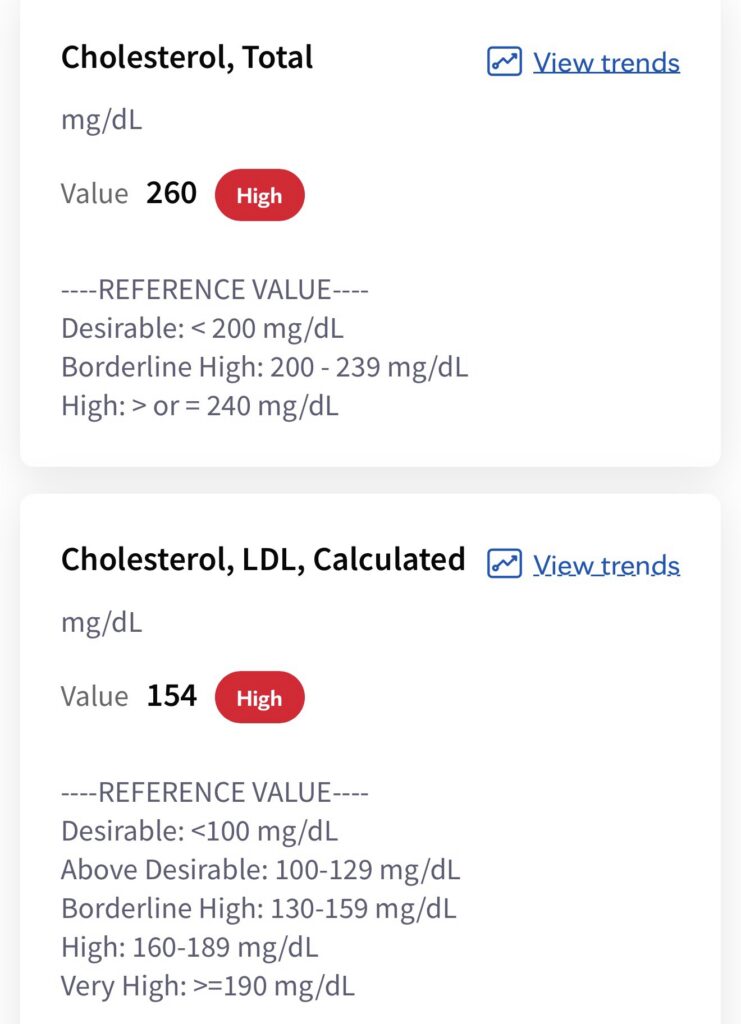
High cholesterol.
I sat there looking at a number I didn’t like. There’s plenty of controversy over cholesterol online, so I went back and forth internally about whether there was even a problem. Honestly, part of me was in denial.
So I started digging around. What does this number mean? What moves it? What would I do about it?
My doctor set up a call and we talked it through: no medication to start. We’d give food a shot first, and recheck in six months. That was the deal — six months, then we’d look at the numbers again and decide from there.
I’ll be honest, I didn’t overhaul my whole life. I took a hard look at what I was actually eating, day to day, and made two changes I could live with:
- I cut out red meat about 95% of the time — no one is perfect — and replaced it with beans, a real shift for someone who was a believer in low-carb living.
- I added flax to my diet every single day.
I kept working out, but that’s not what changed anything. I was already working out when my cholesterol was high. No drama, no punishment, no “starting Monday.” Just steady, ordinary choices, repeated.
Six months later, I went back for the retake.
My LDL had dropped from 154 to 83 — 71 points. My total cholesterol went from 260 to 186. And my HDL barely moved at all, 89 to 84, still well above the healthy range. No medication. I made two changes I could stick with, and something in the mix moved the number more than either one
alone would explain.
He looked at the new numbers and said, “Wow, I’m impressed.” He never asked how I did it — what I changed, what I ate, what actually moved the number.
That’s not a knock on him, he’s great and was genuinely happy for me. But doctors get almost no training in nutrition. It’s not in the curriculum, and it’s not in a fifteen-minute visit. The system is built to read the number, not to ask about the how.
I want to be really clear about something: this is my story, not a prescription. Everybody’s numbers are different, everybody’s doctor is different, and nobody should read this and decide anything about their own health without talking to their doctor first. That’s the whole point, actually — talk to your doctor. Bring your questions. Ask what the numbers mean, and what your options are, and what a recheck would look like.
But here’s what I learned, and it’s the reason I’m writing this: it’s easy to take the prescription, but there are risks with that. There’s a path to better health without them. Nobody is going to sit with your numbers the way you can. You own them.
That’s not a burden. That’s the whole game. Knowing where you stand is what turns “I should probably do something about my health” into “I know exactly what I’m working on, and I know whether it’s working.”
With all the craziness in the world these days, it feels more important than ever to take care of ourselves — and to be kind to each other while we’re at it. Knowing your numbers is one small, steady way to do the first part.
So here’s my question for you: do you know your numbers? Not vaguely — actually know them. Your cholesterol, your blood sugar, your vitamin D, your blood pressure. The baseline that tells you where you’re starting from.
If you don’t, that’s not a failure. It’s a starting line. Ask for the printout. Ask what it means. And then — this is the part that changed everything for me — ask when you’ll check again.
Because six months from now, you could be holding a very different piece of paper.